Who writes them
It started with 16 pages for nine students
In January 2019, Julien Ferrand was tutoring nine international students in Lille for their first calculus exam. They had a week left and a 300-page textbook. He wrote them the formulas they kept getting wrong, with the trap next to each one, on 16 pages.
One of them posted the PDF in a class group chat. A week later, 300 students he had never met had downloaded it, and the first emails asked for statistics.
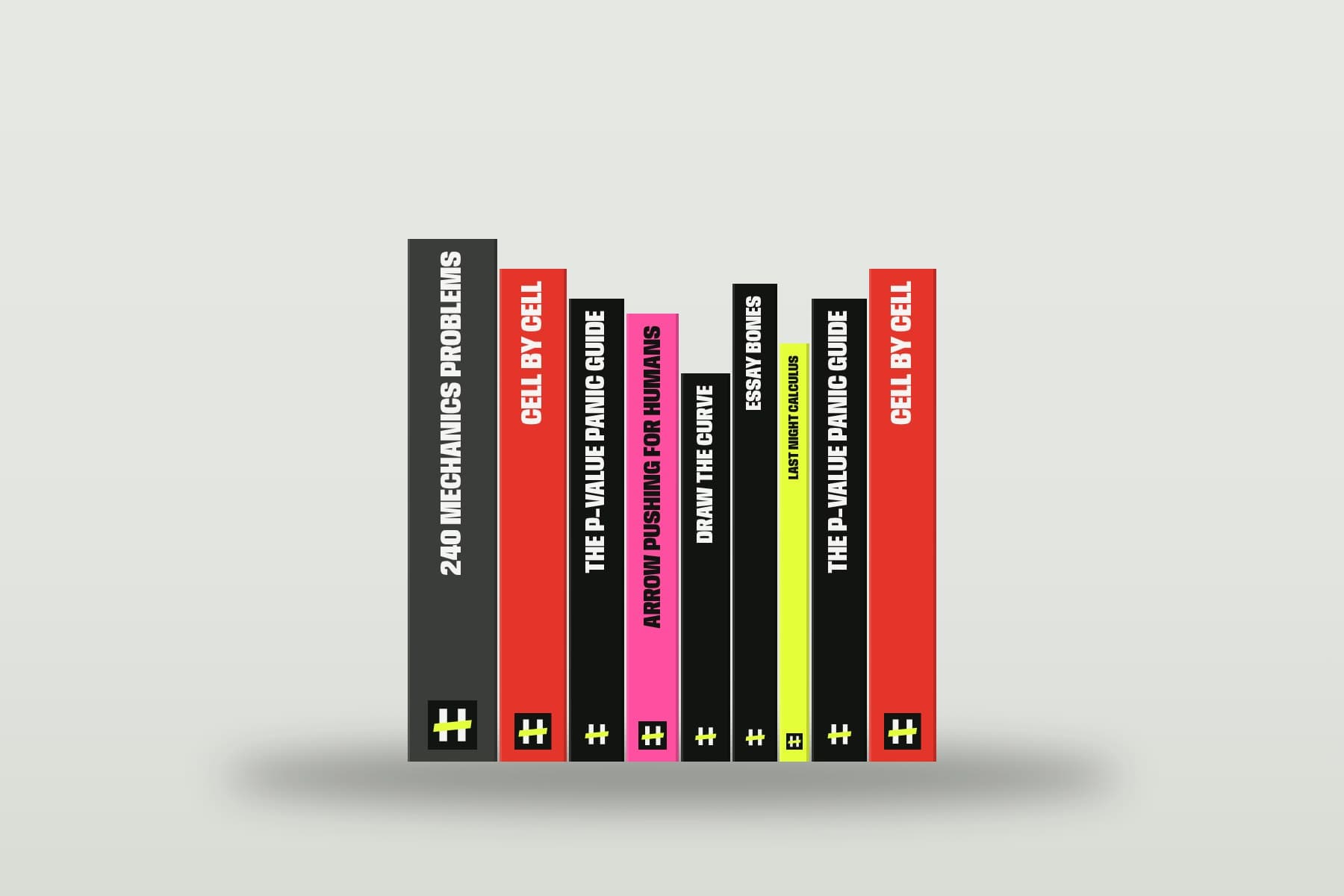
The first guide had a mistake on page 9
The integration by parts formula in that first PDF had a sign wrong. Forty students wrote in to say so, most of them politely. Julien fixed it overnight and sent the new version to everyone.
That week set the rule we still follow. Every guide is checked by two tutors, then read by a test group of eight first-years who mark anything unclear in red. If a guide fails the test group, it goes back for another round. Essay Bones needed four.
It is slower than writing a textbook summary. It is also why students keep the decision tree from the P-Value guide taped above their desks.
- Tutors who check each guide
- 2
- Students in each test group
- 8
- Months to write one guide
- 4-11
Seven guides, one at a time
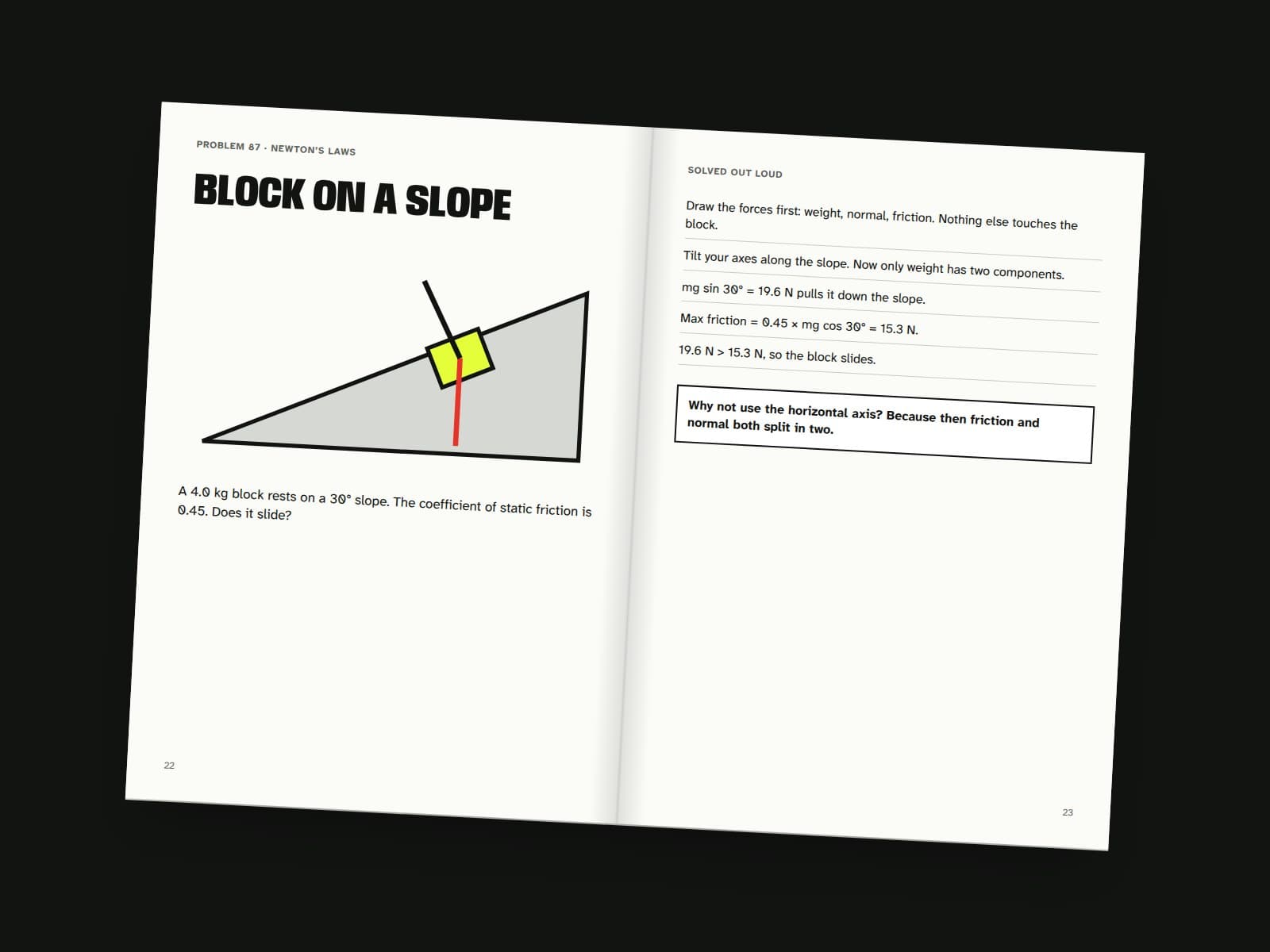
Problem 87 of 240 Mechanics Problems. Each solution is written the way you would explain it to a friend.
Four tutors who still mark exams
Nobody on the team writes about a subject they do not teach. That is the only hiring rule we have.
Julien Ferrand
Founder, maths and physics
Tutors first-years since 2016. Wrote Last Night Calculus and the 240 mechanics problems, and still answers most of the emails.
Amira Benali
Statistics
PhD in applied statistics. Built the decision tree on page 3 of the P-Value guide after marking 400 lab reports.
Sean Doyle
Essays and humanities
Taught history in Cork for nine years. Reads every essay example aloud before it goes into a guide.
Léa Marchand
Chemistry and biology
Researcher in pharmacology. Draws every mechanism and diagram by hand before it is typeset.
Your exam is probably on our list
Calculus, statistics, organic chemistry, cell biology, mechanics, microeconomics and essay writing.